
The 4-Day Ausangate Trek is the ultimate high-altitude adventure for travelers seeking the raw beauty and spiritual essence of the Andes. This trek is a full circumnavigation at the foot of Apu Ausangate, the fifth-highest mountain in Peru and a revered deity in Andean cosmology, offering a journey that challenges both body and mind.
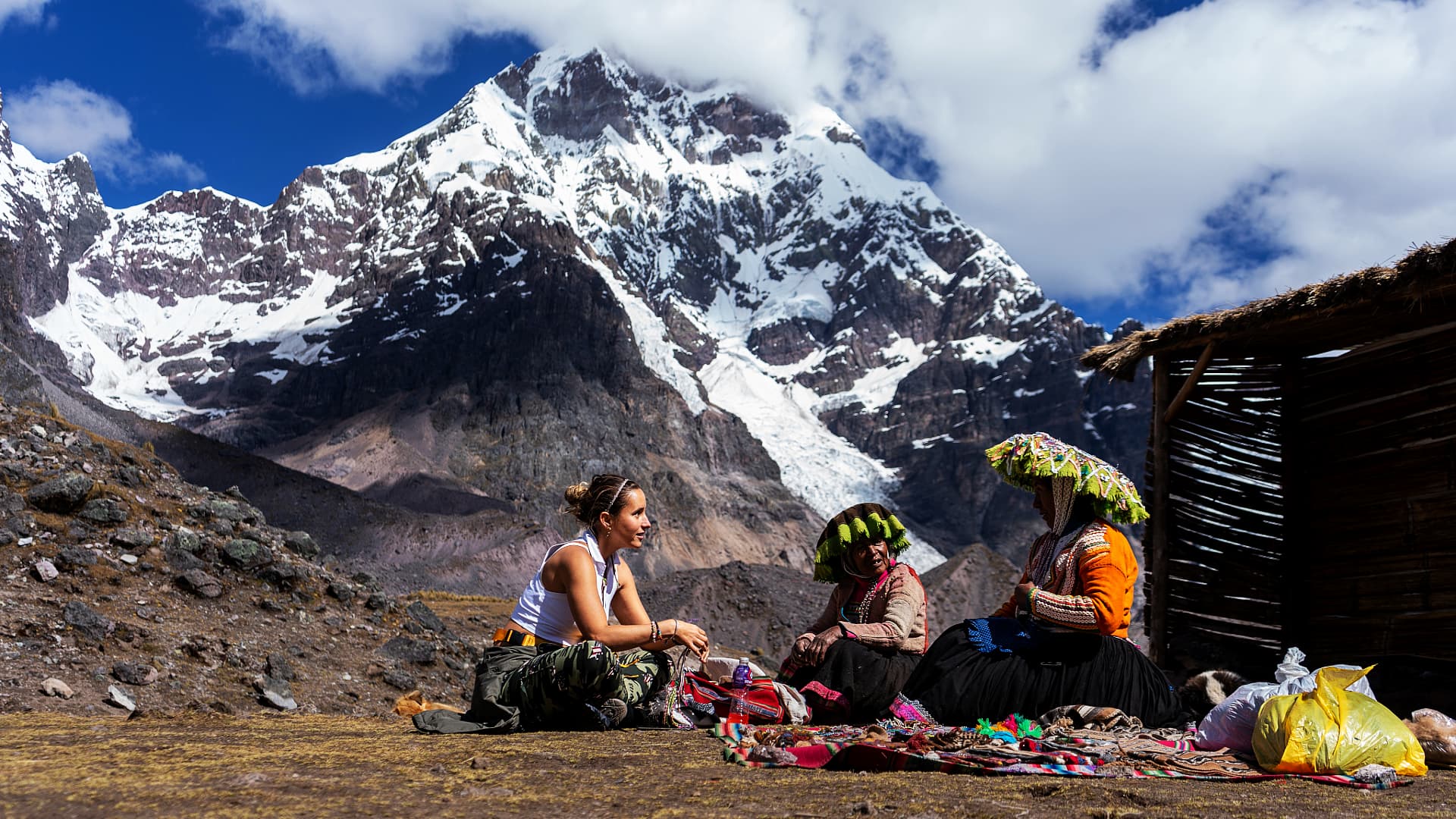
The route passes through mountain landscapes above 5,000 meters (16,400 ft), featuring colossal glaciers, turquoise lakes, and endless highland plains. Along the way, trekkers encounter local communities of llama and alpaca herders, who preserve centuries-old traditions and wear vibrant clothing that contrasts vividly with the snowcapped peaks.
Designed for those seeking complete disconnection, the Ausangate Trek offers no trains or buses—just the mountains, the stars, and the silence of the high Andes. The expedition concludes with a relaxing soak in the Pacchanta hot springs, surrounded by snow-covered peaks, providing the perfect reward for an unforgettable adventure. The Ausangate Trek is more than a hike—it is a rite of passage in the heart of Peru’s sacred mountains.
Duration
Group Size
Maximum Altitude
Level of Difficulty
Type of Service
Qualification
Itinerary
Day 1: Cusco – Tinke – Upis (Meeting the Apu)
We depart from Cusco toward the village of Tinke, where the trek begins with a gradual ascent to the Upis campsite. Here, you’ll enjoy your first close-up views of Ausangate and relax in local hot springs with the glacier as a dramatic backdrop.
Day 2: Upis – Arapa Pass – Jatun Pucacocha Lagoon
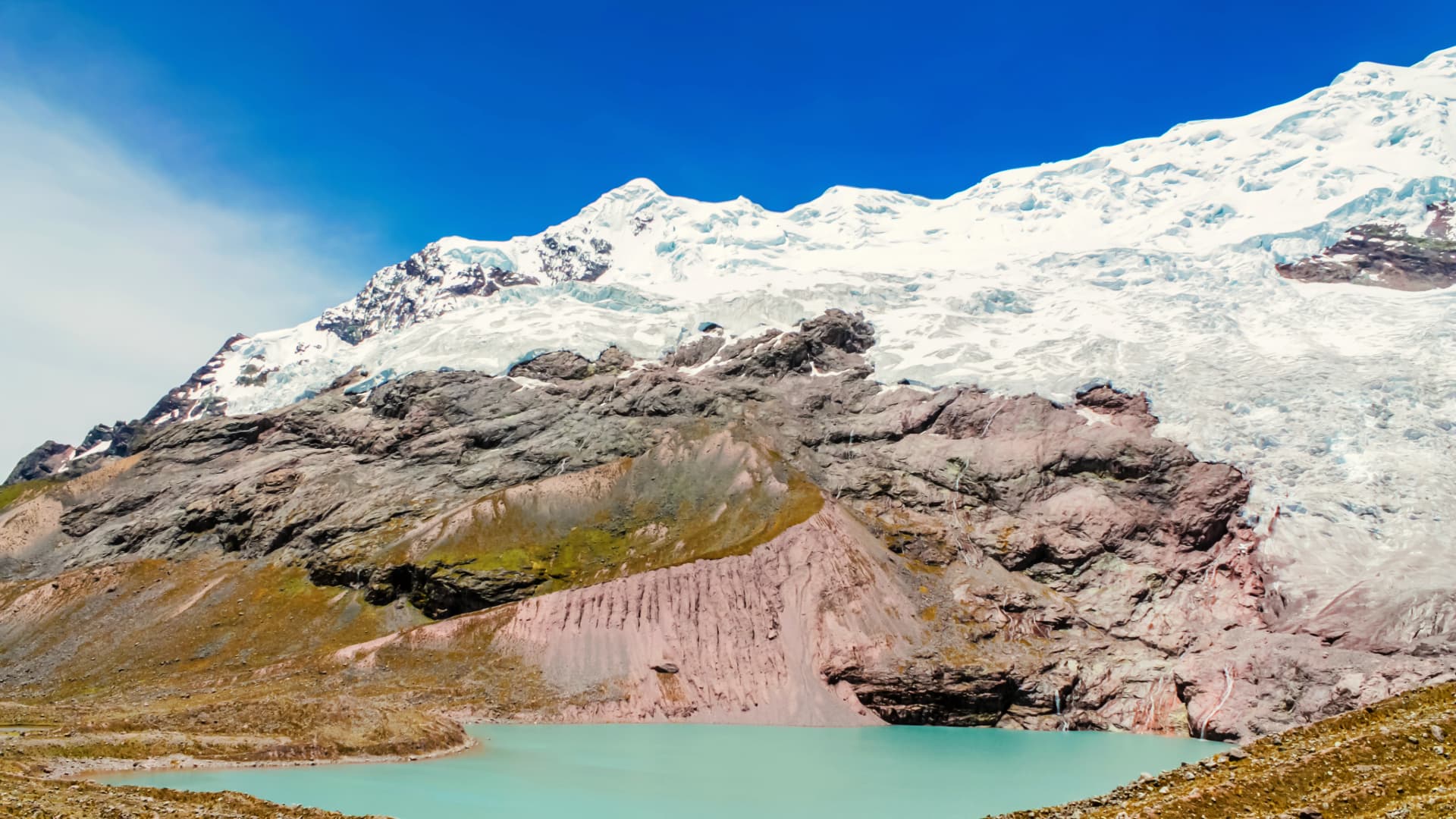
We cross Arapa Pass (4,850 m / 15,910 ft), where the scenery becomes increasingly spectacular with a series of multi-colored lagoons. We then descend to Jatun Pucacocha, a deep turquoise lake where the glacier appears to plunge directly into the water.
Day 3: Palomani Pass – Soraypampa (The Roof of the World)
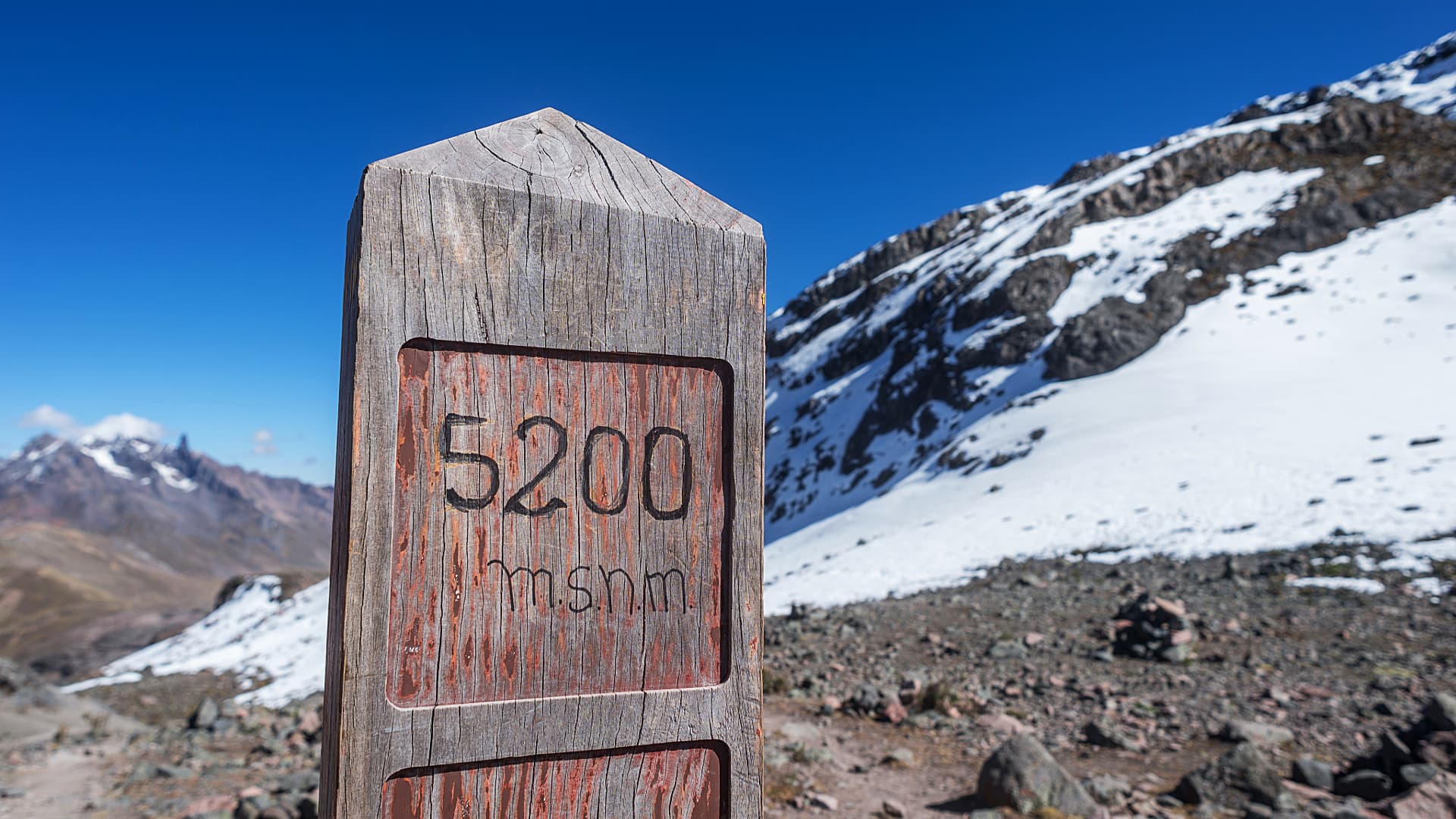
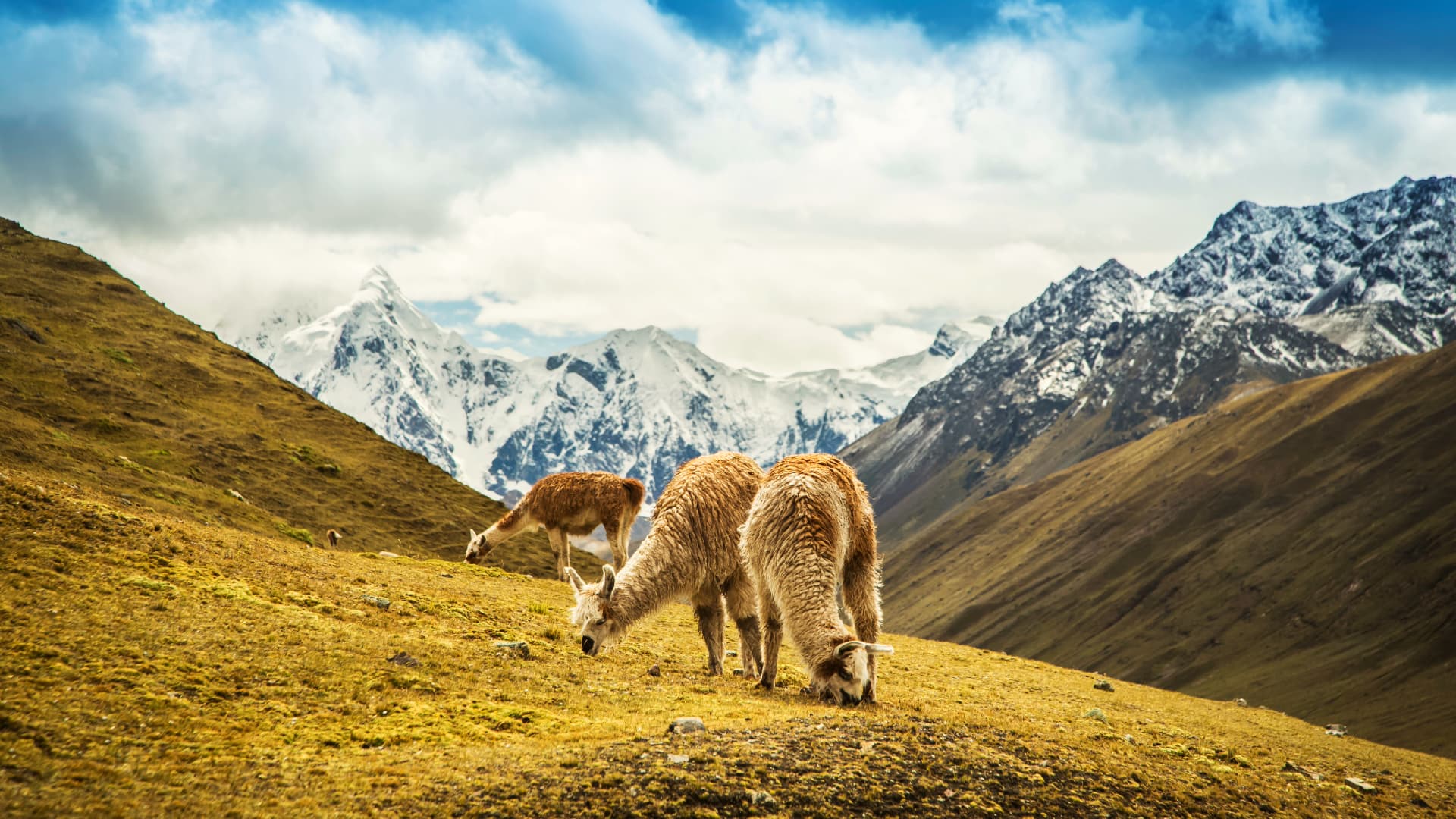
The most demanding day of the trek. We ascend to the highest point of the journey, Palomani Pass (5,200 m / 17,060 ft), where the views are truly breathtaking. We then descend into the Finaya Valley, home to wild herds of vicuñas and alpacas in their most natural state.
Day 4: Jampa Pass – Pacchanta – Cusco (The Return)
We cross the final mountain pass, Jampa Pass (5,010 m / 16,440 ft), descending through the famous Seven Lakes Circuit until reaching the community of Pacchanta. After a final soak in its hot springs and a farewell lunch, we return to Cusco by private transportation.
Includes
- Specialized Professional Guide: Certified high-mountain guide with first aid training.
- Private Transportation: Pick-up from your hotel in Cusco to the trailhead (Tinki) and return.
- Camping Equipment: High-altitude thermal tents, dining tent, kitchen tent, and sleeping pads.
- Full Board Meals: Daily breakfasts, lunches, and dinners prepared by a professional trekking chef.
- Pack Horses: Mules and horsemen to carry camping gear and a portion of your personal luggage.
- Entry Fees: Entrance to local communities, campsites, and the Pacchanta Hot Springs.
- Safety Gear: Emergency oxygen tank and a comprehensive first aid kit.
Not include
- Sleeping Bag: Must be rated for sub-zero temperatures (available for rent).
- Travel Insurance: Mandatory insurance covering high-altitude mountain rescue.
- First Breakfast & Last Dinner: Usually not included on the first and last day of the tour.
- Personal Expenses: Tips for the crew, extra snacks, or souvenirs.
Recommendations
- Proper Acclimatization: Stay in Cusco for at least 3 days before the trek; you will be hiking above 16,400 feet.
- Layered Clothing: Thermal base layers, fleece or down mid-layers, and a waterproof windbreaker.
- Footwear: Waterproof trekking boots, well broken-in to prevent blisters.
- Sun Protection: High-SPF sunscreen, UV-protection sunglasses, and a wide-brimmed hat.
- Personal Gear: Trekking poles with rubber tips, a headlamp, and a power bank.
Frequently Asked Questions
How difficult is the trek actually?
It is considered a challenging route. You don’t need to be a professional climber, but you do need good physical endurance. The biggest challenge isn’t the path itself, but hiking for several days above 13,000 feet in very cold temperatures.
Where will we sleep during the tour?
We sleep in high-mountain campsites. We set up special tents designed to withstand the Andean cold and wind. You will have a dining tent for meals and sleeping tents for resting, always surrounded by pure nature.
What happens if I feel sick due to the altitude?
Our guides are experts in mountain safety. We always carry oxygen tanks and a complete first aid kit. If symptoms persist, the guide will arrange an immediate descent to a lower altitude for your safety.
Do I have to carry my entire backpack myself?
No, it’s not necessary. We have pack horses that will carry the camping gear and a duffel bag with your personal belongings (usually up to 7kg). You only hike with a small daypack for your water, camera, and daily jacket.
Is there internet signal or electricity on the route?
No. Ausangate is a total disconnection route. There is no cell signal or power outlets to charge devices. We recommend bringing a portable power bank charged to 100% and enjoying the silence of the mountains.
From Our Gallery
Recent Tours

Quelccaya Expedition: Trek the World’s Largest Tropical Glacier
- Full Day (approximately 17 hours, from 03:30 AM to 08:30 PM).
- Specialized high-mountain expedition (Private or small group).


